

The Future of LED Technology
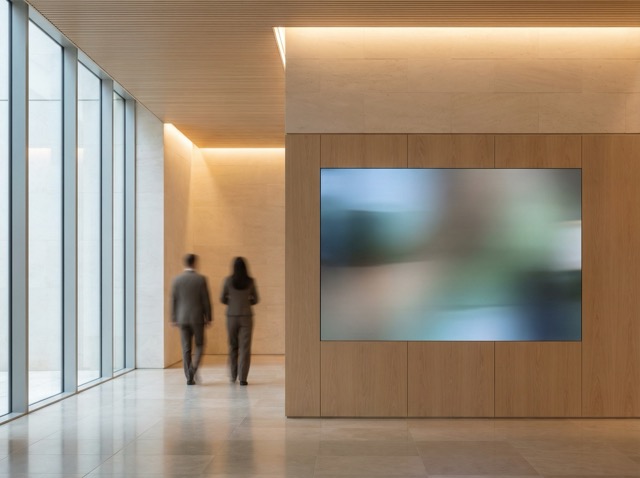
Four shifts shaping the next era of fine pitch indoor LED
Direct view LED has moved past the “big screen” phase.
In the right environments, it now behaves more like a building material than a piece of AV. A surface that can carry information, shape atmosphere, and protect brand experience in spaces where details are noticed.
At Megascreens, we work in a specific niche: indoor, fine pitch LED for brand-critical spaces. The future, in that context, is not about novelty. It is about making DV LED more predictable, more serviceable, and more integrated into the spaces it lives in.
Here are four shifts that will define what comes next.
1) From display to architectural surface
The biggest change is also the simplest: DV LED is increasingly specified as part of the architecture, not as an add-on.
That changes how it should be designed and judged. The questions move from:
- How big is it?
to: - How does it sit in the space?
- What does it look like when it’s off?
- How do sightlines work from real viewing positions?
- Does it feel calm and intentional over a full day?
As cabinet design improves and fine pitch becomes more common, the opportunity grows. Walls become canvases for storytelling, collaboration, and orientation. Not because it is fashionable, but because it reduces friction and raises the quality of experience.
If a screen is meant to feel permanent, it has to be designed like a permanent part of the building.
2) Lifecycle engineering becomes the real differentiator
The next phase of DV LED will be less about spec sheets and more about lifecycle value.
Most screens look good on day one. The real test is what the screen looks like in year three and year five, after thousands of operating hours and countless content changes.
This is where engineering choices matter:
- stable colour calibration over time
- power and thermal management that protects consistency
- modular construction that reduces downtime
- sensible service access that avoids disruption
- brightness chosen for the environment, not pushed for effect
This is also where sustainability becomes practical rather than performative.
Lower energy use, longer operating life, and fewer service interventions matter more than a “green” headline. Facilities teams want predictability. Brand teams want colour accuracy. Procurement wants long-term value. These requirements increasingly point in the same direction.
A useful principle: pixel pitch and brightness are not targets. They are choices that should match the space, the viewing distance, and the content.
3) Spaces become multi-use, so displays must behave like systems
Single-purpose rooms are disappearing.
A reception becomes an event space. A hospitality lounge becomes a presentation area. A retail floor becomes a stage for launches, campaigns, and community moments.
DV LED fits that shift well, but only when the display is treated as a system rather than a single object.
That means thinking through:
- content templates that work across multiple use cases
- governance: who updates what, and when
- operating modes: daytime, evening, event, closed
- integration with the wider environment so the screen supports the space rather than competing with it
The technology will continue improving, but the bigger unlock is operational discipline. A beautiful screen with unmanaged content becomes noise quickly.
The best outcomes come when strong engineering is matched by calm, controlled content.
4) Human-centred viewing becomes a first-class requirement
As DV LED becomes more common indoors, expectations will rise around visual comfort.
People now spend longer in front of screens than they used to. In offices, hospitality environments, and premium retail, a display is often in peripheral vision for hours. That changes what “good” looks like.
The next phase will prioritise:
- comfortable brightness in mixed lighting
- consistent colour that protects brand accuracy
- clean motion handling for real-world content
- integration that feels intentional when on, and considered when off
This is where premium becomes measurable. Not through spectacle, but through how effortless the screen feels to live with.
A screen can be impressive and still be calm. That balance will define the best installations.
What will not change
Direct view LED will keep evolving. But the projects that succeed will still be built on fundamentals:
- clear intent for the screen in that space
- correct pitch selection for real viewing distances
- engineered reliability for long daily operating hours
- serviceability planned from the start
- ownership and accountability after install
In brand-critical indoor environments, the screen is not a campaign. It is infrastructure.
A practical next step if you’re planning DV LED
Before you look at sizes or specs, define three things:
- the primary job of the screen in that space
- typical viewing distance and lighting conditions
- how the screen will be operated and maintained over its life
Get those right and the “future” part becomes straightforward. You are choosing a system designed to keep performing, quietly, for years.

Frequently asked questions
Yes. DV LED displays are well suited to healthcare settings due to their high reliability, long lifespan, and excellent visibility. When specified correctly, they can be used safely in reception areas, waiting rooms, consultation spaces, and staff-only environments.
LED displays help patients feel more informed and at ease by providing clear wayfinding, appointment updates, and reassuring visual content. In waiting areas, they can reduce perceived wait times and create calmer, more welcoming environments.
Yes. LED screens can support telemedicine consultations, staff briefings, and internal communications by providing high-resolution visuals, accurate colour reproduction, and reliable performance for video and data sharing.
Modern DV LED systems are designed for minimal maintenance. Front-serviceable modules allow quick repairs without disruption, and remote monitoring enables proactive support — making them ideal for environments where uptime is critical.
Still have questions?
Stay ahead
Get insights delivered
Receive tips on LED installations, design trends, and industry updates.