

2026 LED Wall Innovations: What Matters for Your Business

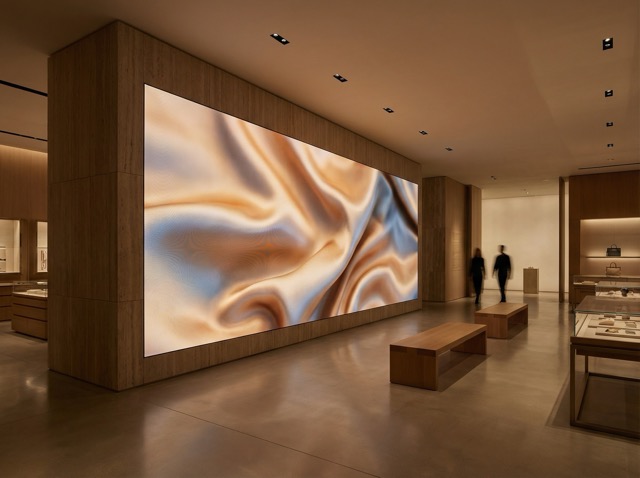
2026 LED Wall Innovations: What Matters for Your Business
LED walls have moved from "nice to have" to brand infrastructure.
In retail and hospitality, the screen is often the first impression, the atmosphere-setter, and the fastest way to change a message without changing the space. In 2026, the innovation isn't just brighter pixels or thinner cabinets. It's how LED walls are designed, operated, and measured as part of the customer experience.
This article breaks down the three shifts we see shaping LED walls in 2026, and what they mean for businesses that care about consistency, reliability, and long-term value.
1) The rise of Micro-LED (and what people really mean by it)
“Micro-LED” is now used as a catch-all term for finer pixel pitch, higher density, and more seamless viewing up close. In practice, the trend is about bringing premium image quality to larger canvases, without compromising reliability.
Competitor commentary on 2026 trends is broadly directionally right, but most of it stops at headline claims. The real question for a retail or hospitality buyer is simpler:
What does finer pitch actually change in the real world?
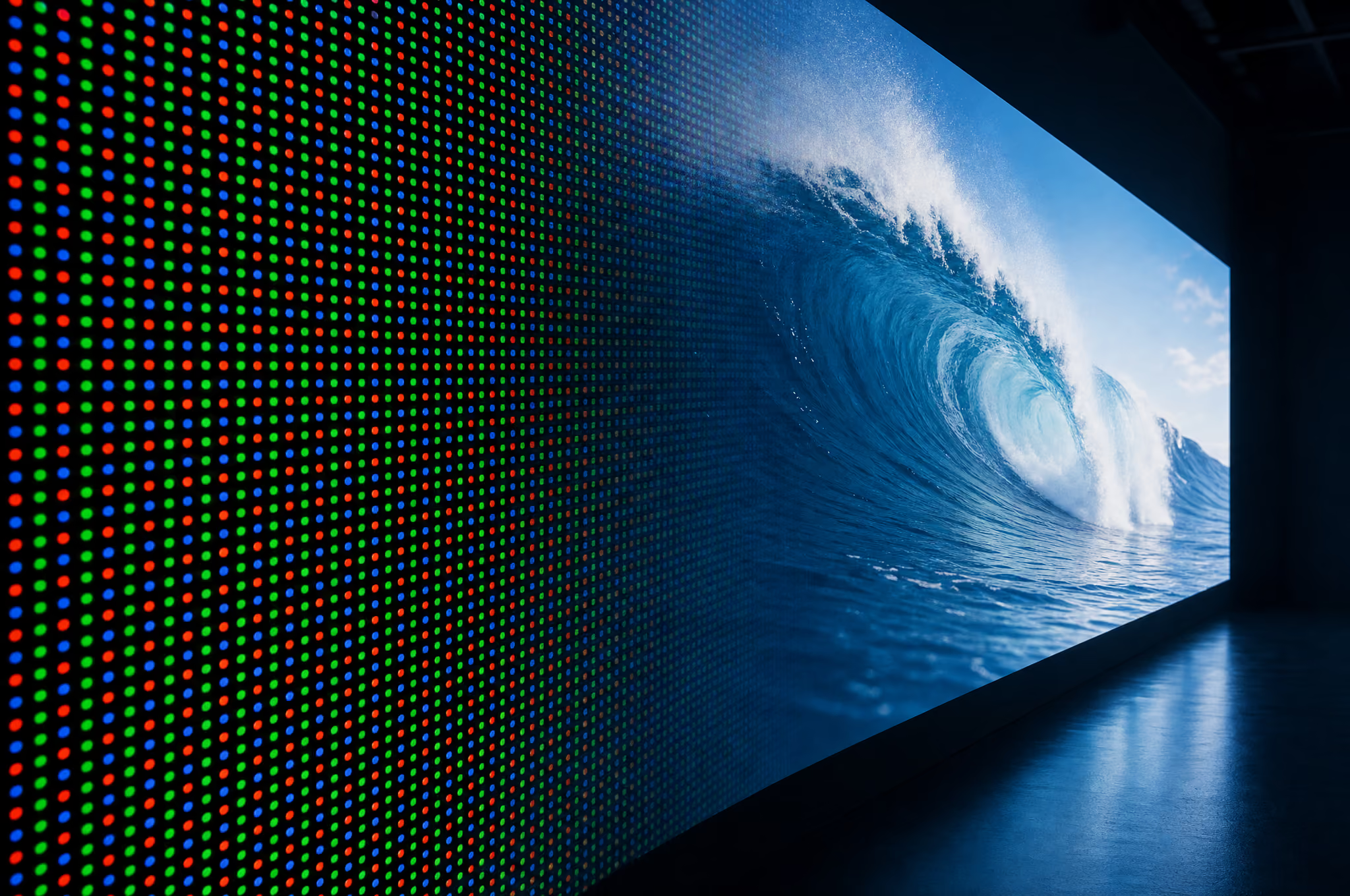
What micro-LED style advances unlock for businesses
- Close viewing without distractions. In luxury retail, lobbies, and hospitality environments, people stand close. Finer pitch reduces visible structure and keeps the image calm and cohesive.
- More content flexibility. High-resolution canvases handle typography, product detail, and subtle gradients with fewer compromises.
- Better integration into architecture. As screens become more “wall-like”, the design conversation shifts from “where can we fit a display?” to “what should this surface do?”
Industry sources point to finer pitch and higher resolution potential as a key 2026 direction.
A Megascreens perspective: innovation has to earn its place
New LED packaging and fine-pitch approaches can deliver genuine gains, but only when they are deployed with discipline. For most commercial environments, the goal is not “the smallest pitch available”.
It is:
- the right pitch for viewing distance and content
- stable colour over time
- predictable performance across long operating hours
- a service model that keeps the wall working for years
That is why Megascreens product decisions prioritise reliability over novelty, and why pixel pitch is always selected based on the environment and use-case, not a default spec.
2) Integration with AI: from “digital signage” to adaptive experience
In 2026, AI is less about flashy gimmicks and more about operational advantages:
- content that stays accurate
- promotions that change on time
- messaging that adapts to context
- measurement that goes beyond “it looks good”
Across the industry, AI is increasingly discussed as part of the digital experience layer.
Where AI creates real value in retail and hospitality
1) Smarter content operations
Most businesses do not struggle with screens. They struggle with keeping content current across teams, locations, and dayparts. AI-assisted workflows can help generate variants, localise messaging, and reduce the friction of updates.
2) Context-aware scheduling
Think: breakfast vs evening service, weather-triggered creative, occupancy-based switching, or queue messaging that reduces perceived wait times.
3) Performance feedback loops
AI can support analytics such as dwell-time patterns, content engagement, and campaign performance. That matters when your LED wall is part of revenue, not decoration.
Real-world outcomes businesses recognise
Digital menu boards and related systems have documented impacts on check size, category uplift, and operational accuracy in quick service environments. For example, McDonald’s digital transformation work has been reported with measurable improvements in average check size and order accuracy in certain deployments.
The point is not that “AI increases sales”. The point is that modern LED walls can become measurable infrastructure, when the content layer is treated seriously.
The caution: personalisation must be tasteful and safe
Retail and hospitality brands are right to be careful. If “personalisation” feels intrusive, it damages trust.
The better approach is usually:
- context personalisation (time, location, service mode)
- inventory-led messaging
- menu and offer optimisation
- brand-consistent creative variations
It should feel considered, not creepy.
3) Sustainability and energy efficiency: the trend that affects budgets and reputation
Sustainability is no longer an abstract brand value. It shows up in tender requirements, ESG reporting, energy bills, and long-term asset decisions.
The 2026 shift is towards systems that are:
- more efficient in day-to-day operation
- cooler and more stable over long run-times
- serviceable, modular, and supported so they last
What to look for in a sustainability story that is real
1) Power architecture that reduces waste
Common-cathode configurations can materially reduce power consumption compared to common-anode approaches, while also lowering heat output. Lower heat supports longevity and colour stability. Megascreens specifies common-cathode options where appropriate, with savings of up to 30 to 40% depending on configuration compared to common-anode systems.
2) Thermal performance that supports longevity
Heat is the quiet enemy of consistency. Efficient systems run cooler, which supports stability over years.
3) Serviceability as sustainability
If a wall is designed to be maintained, it stays in service. If it is treated as disposable, it becomes waste. Front-service access and modular components matter because they reduce downtime and extend useful life.
Industry commentary also points to improving energy profiles as part of the broader trend.
5 Key Considerations When Choosing Your LED Wall
Use this checklist to pressure-test any LED wall proposal, including your own.
1) What environment is it actually for?
- Indoor retail, close viewing, controlled lighting
- Daylight-facing shopfront, high ambient light
- Hospitality, mixed lighting, long operating hours
Brightness and product family should match the environment, not preference. Megascreens differentiates between indoor fine-pitch systems and high-ambient solutions for exactly this reason.
2) Match pixel pitch to viewing distance and content
Ask:
- How close will people stand?
- Will you show product detail, fine typography, or menu content?
- Is the wall primarily atmosphere, storytelling, or information?
A pitch that is too coarse feels noisy up close. Too fine can be unnecessary cost. There is a correct answer, but it is always contextual.
3) Treat brightness as a design variable, not a headline
You should hear phrasing like:
- “typical brightness”
- “peak brightness”
- “depending on configuration”
Overstated brightness claims usually hide trade-offs in heat, power, and colour stability.
4) Plan integration, maintenance access, and acoustic impact
The best installations feel effortless because the engineering is handled early:
- wall structure and tolerances
- cable routing and service access
- acoustic expectations in quiet spaces
- low-profile integration into finishes
This is also where long-term reliability is won or lost.
5) Decide how you will run it after install
A good LED wall is not "set and forget". Key questions to consider:
Who handles content updates?
- What is the approval process?
- Do you need scheduling, multi-location control, analytics?
- What support model is in place when something goes wrong?
After-care should be integral, not an add-on.
Conclusion: innovation is useful when it reduces risk and raises standards
The strongest LED wall projects in 2026 will not be the ones that chase every trend.
They will be the ones that:
- choose fine pitch and packaging that fits the use-case
- use AI to reduce friction and improve consistency, not add noise
- invest in efficiency, serviceability, and longevity
That is what protects your brand experience, and what makes the wall an asset rather than an expense.
Next step
If you are in early planning, use the Megascreens LED Wall Calculator to sanity-check sizing, viewing distance, and use-case fit. Then use EZ Quote to get a fast, structured estimate based on the reality of your space.
If you have questions, get in touch. We provide straightforward guidance, and we will tell you when LED is not the right answer.
Frequently asked questions
Yes. DV LED displays are well suited to healthcare settings due to their high reliability, long lifespan, and excellent visibility. When specified correctly, they can be used safely in reception areas, waiting rooms, consultation spaces, and staff-only environments.
LED displays help patients feel more informed and at ease by providing clear wayfinding, appointment updates, and reassuring visual content. In waiting areas, they can reduce perceived wait times and create calmer, more welcoming environments.
Yes. LED screens can support telemedicine consultations, staff briefings, and internal communications by providing high-resolution visuals, accurate colour reproduction, and reliable performance for video and data sharing.
Modern DV LED systems are designed for minimal maintenance. Front-serviceable modules allow quick repairs without disruption, and remote monitoring enables proactive support — making them ideal for environments where uptime is critical.