

LED Video Walls for Retail: From Visual Impact to Measurable Results

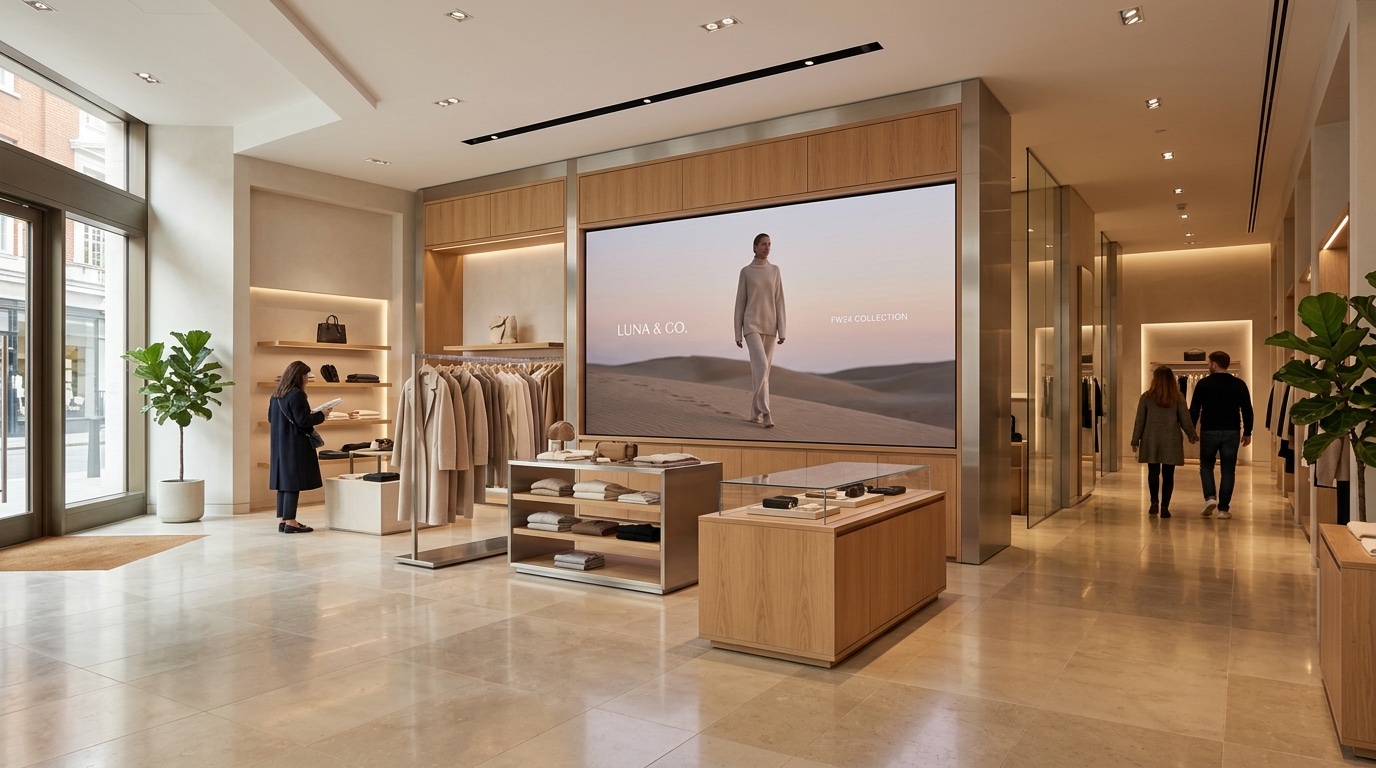
Retail displays have stopped being decoration
Physical retail is no longer measured in shelf space and square footage alone. Your store competes for attention with every screen your customer carries. The brands winning on the high street treat their displays as commercial infrastructure, not decoration.
The evidence supports them. Retail studies report that shoppers are up to 80% more likely to enter a store after seeing a digital display. Nearly half of shoppers say in-store digital screens influence what they buy. An LED video wall is no longer a design flourish. It is directly tied to footfall, dwell time and conversion.
So the useful question is not whether to install a screen. It is where a display earns its keep in your customer's journey, and how you will know it is working. This post walks through the three moments that matter, and what to measure at each one.
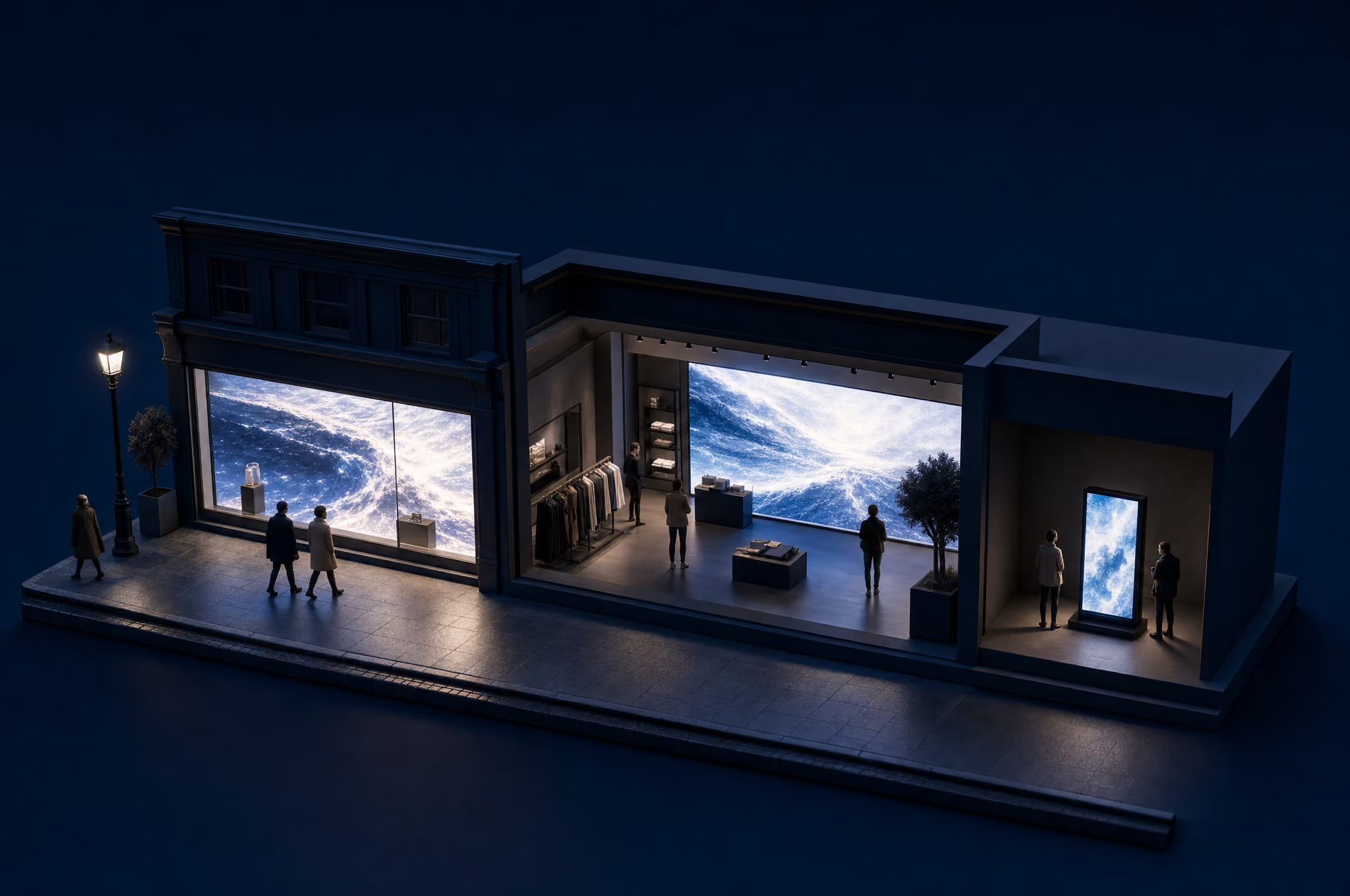
1. The window: stop people before they walk past
The shopfront is where the commercial case is strongest. Your window competes with daylight, reflections and a street full of distractions. A printed graphic cannot fight that. A window-facing LED display can.
The engineering requirement is specific. Glass kills ordinary screens. Direct sunlight washes them out, and reflections finish the job. A shopfront display needs to be daylight-visible, clearly readable in direct sunlight, and colour-accurate enough that your brand looks like your brand.
This is what our MS Max Bright range is built for, with brightness configured to the glass, orientation and light conditions of your specific frontage. We recently fitted window-facing displays for a department store on Oxford Street, one of the most demanding retail environments in the UK. The brief was simple: stop people on one of the busiest pavements in Europe.
What a well-specified window display changes:
- Motion where every neighbouring window is static. Movement is what the eye registers first.
- Campaign changes in minutes, not the days a print and fit-out cycle takes.
- Content scheduled by time of day, from morning commuters to evening browsers.
- A window that looks as considered at night as it does at noon.
Three planning questions decide most window projects before hardware is even discussed. How far away should the display be readable, from across the street or from the pavement? How much depth exists behind the glass, and what does that mean for mounting and access? And what are the light conditions across the day, because a south-facing window in July and the same window on a December evening are two different engineering problems. Answer those first and the right configuration usually chooses itself.
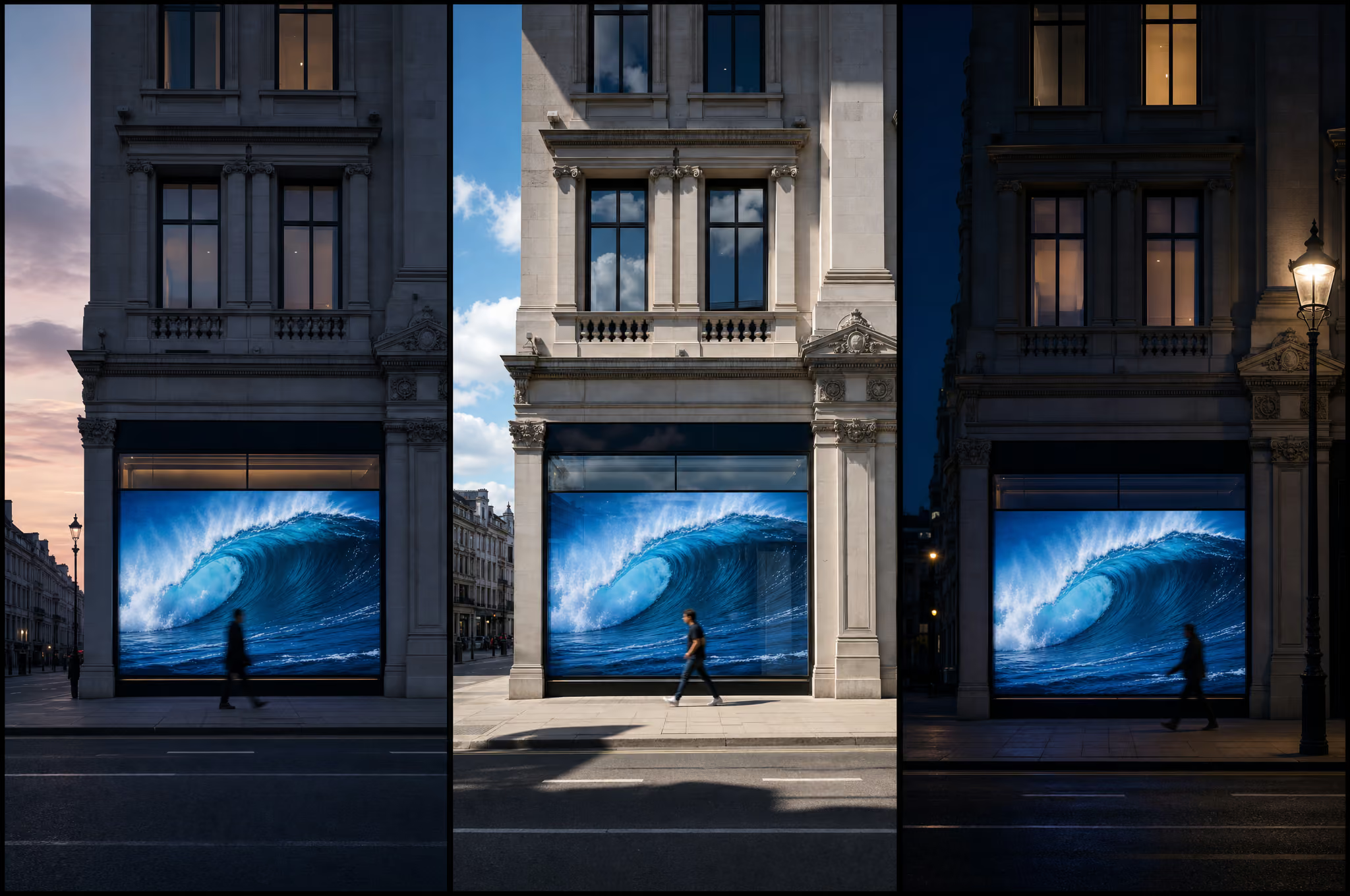
If your window is your single biggest audience, and for most high-street retailers it is, this is where to start. Our guide to shopfronts and window displays covers the planning questions in more depth.
2. Inside the store: hold attention once you have it
Footfall is only the first half of the job. Once a customer is inside, the display's role changes. It stops shouting and starts guiding. In-store, the screen shapes atmosphere, directs the journey and gives featured products a stage.
The requirements change with the role. Brightness matters less. Image quality, colour consistency and integration matter far more. A screen viewed from two metres needs fine detail with no visible pixel structure. A screen beside your merchandising needs colour your visual team can trust. And the whole installation should feel like architecture, not like an add-on bolted to a wall.
Our MS Pro Series handles this work: fine-detail LED video walls designed into the fabric of indoor retail environments, from feature walls to full immersive spaces. We have installed them in flagship interiors where the wall carries the brand story for the whole floor.
Used well, an in-store LED video wall:
- Gives hero products and campaigns a presence no shelf talker can match.
- Sets the mood of a space, and changes it by daypart or season.
- Carries brand storytelling that gives customers a reason to linger.
- Keeps every location on-message from one central content plan.
Placement matters as much as the display itself. The strongest interior installations sit at natural decision points: the view from the entrance, the back wall that pulls customers through the store, the fitting room queue where dwell time is guaranteed. A display in the wrong place is simply an expensive light. A display at the point where customers pause, look up and decide is working retail space.
There is a quieter benefit too. A well-integrated LED video wall signals investment. Customers read the store as current, confident and cared for. That perception transfers to the products around it, which is precisely why flagship retailers put their best wall behind their best merchandise.
3. Campaigns and pop-ups: displays that move with your calendar
Not every retail moment justifies a permanent installation. Product launches, seasonal campaigns, pop-ups and store events need impact for weeks, not years. This is where a freestanding display earns its place.
The MS Poster is a vertical LED display on wheels. It positions in minutes, plugs into a standard socket and needs no specialist technician. Marketing teams use it the way they once used printed roll-up banners, with three differences. It moves. It updates from a content plan rather than a print run. And it is reused across campaigns for years, rather than printed, used once and thrown away.
For retail teams running a busy calendar, that reuse changes the economics. One display serves the spring launch, the summer sale and the Christmas window queue. The cost of each new message falls to almost nothing.
4. Measure it like media, run it like merchandising
The step most retailers miss is treating the display as a measurable asset. You would not run paid media without tracking it. Your LED video wall deserves the same discipline.
You do not need a complex analytics stack to start. Most retailers already hold the numbers that matter:
- Footfall. Compare door counts before and after the window display goes live, and across content changes.
- Dwell time. Watch how long customers hold in the zones your screens serve.
- Featured product sales. Track the lines you put on screen against the lines you do not.
- Content cadence. Log what played when, so sales patterns can be read against it.
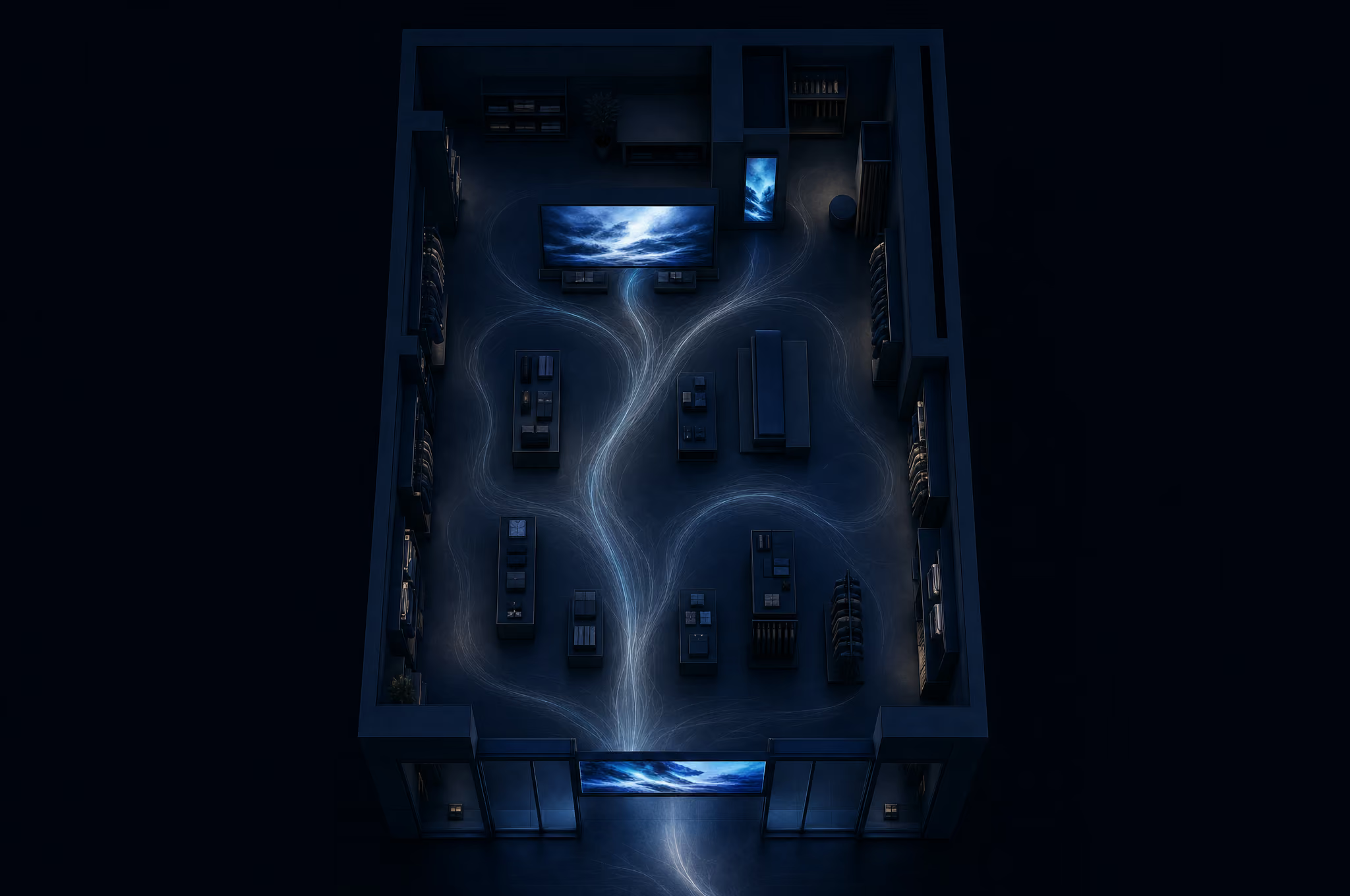
Then run the wall like merchandising. Content is planned, scheduled and reviewed on the same rhythm as your displays and windows. The retailers who get the most from their screens are rarely the ones with the biggest walls. They are the ones who treat content as an operational habit rather than a launch-day task.
In practice that means someone owns the screen. Not as a full-time job, but as a named responsibility, the same way someone owns the window scheme. They hold a simple content calendar, they refresh creative on an agreed cycle, and they retire anything that has gone stale. A screen that has shown the same loop for six months tells customers the store has stopped paying attention. A screen that changed this morning tells them the opposite.
Set the measurement rhythm early, ideally before installation. Take a baseline month of footfall and category sales. Then review the numbers monthly for the first quarter. You are looking for patterns, not miracles: which content pulls people in, which dayparts respond, which featured lines move. Within a quarter you will know what your display is worth, in your store, with your customers. That number is what turns the next conversation, whether it is with your board or your landlord, from opinion into evidence.
This is also why reliability belongs in the commercial case. A dark window on the busiest Saturday of the year is worse than no screen at all. It is why we engineer for continuous operation and stay involved after the install, with remote monitoring and after-care as standard rather than as an add-on.
Where to start
Start with the moment in your customer's journey where attention is worth most. For most retailers that is the window. For some it is the interior wall that carries the brand story. For others it is a campaign calendar that a freestanding display can serve all year.
Whichever it is, the sequence is the same. Define the job the display is doing. Specify the display for the environment, not from a spec sheet. Plan the content operation before the screen arrives. Then measure it like the commercial asset it is.
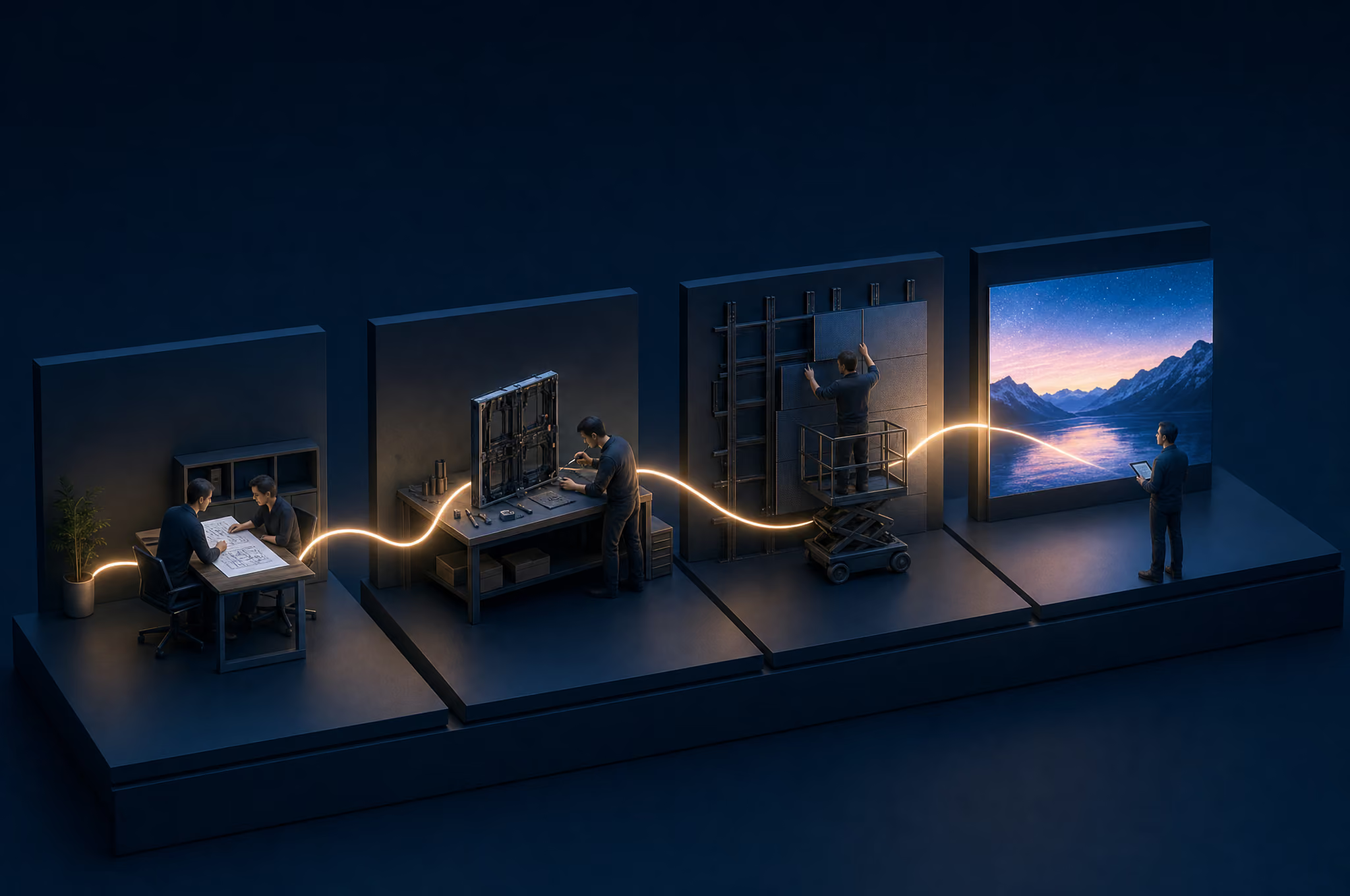
If you are weighing up a shopfront, an interior wall or a campaign display, talk to us about your project. One team here in London owns the whole job, from first consultation through installation and long-term after-care. We will tell you honestly what will work in your space, and what will not.
Frequently asked questions
Yes. DV LED displays are well suited to healthcare settings due to their high reliability, long lifespan, and excellent visibility. When specified correctly, they can be used safely in reception areas, waiting rooms, consultation spaces, and staff-only environments.
LED displays help patients feel more informed and at ease by providing clear wayfinding, appointment updates, and reassuring visual content. In waiting areas, they can reduce perceived wait times and create calmer, more welcoming environments.
Yes. LED screens can support telemedicine consultations, staff briefings, and internal communications by providing high-resolution visuals, accurate colour reproduction, and reliable performance for video and data sharing.
Modern DV LED systems are designed for minimal maintenance. Front-serviceable modules allow quick repairs without disruption, and remote monitoring enables proactive support — making them ideal for environments where uptime is critical.