

Enhancing Healthcare Environments With LED Displays

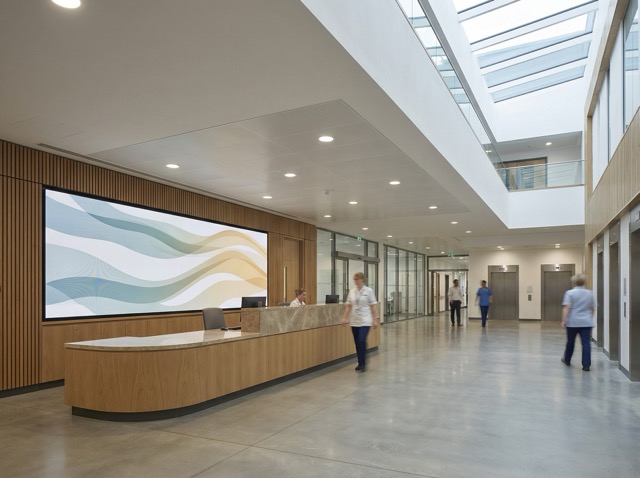
Healthcare spaces carry a lot at once. Clinical accuracy matters. So does the experience around it.
Patients arrive anxious. Visitors are time-poor. Staff are moving fast, often under pressure. In that environment, communication needs to be immediate and consistent. It also needs to feel calm.
That is where well-designed LED displays earn their place. Not as decoration. As infrastructure for clarity.
Used properly, fine-pitch LED displays help healthcare teams guide people, reduce friction, and support better day-to-day operations. The screens become part of the building’s language.
Why communication breaks down in hospitals
Hospitals and clinics are complex spaces. They change by the hour.
Departments move. Clinics run late. Visiting rules update. A door that was correct yesterday is wrong today. Printed signage cannot keep up. Verbal directions do not scale.
The result is predictable:
- People get lost.
- Reception teams repeat the same answers all day.
- Waiting rooms feel uncertain.
- Stress rises before care even begins.
LED display systems solve a practical problem first. They make information easier to find, easier to trust, and easier to keep current.
Wayfinding that stays accurate
Wayfinding is one of the highest value uses of LED in healthcare.
Placed at key decision points, screens can show:
- Directional routes by department
- Live clinic status and expected delays
- Check-in points and queue instructions
- Lift and corridor guidance during closures
The point is not brightness. It is legibility.
In large atriums, reception areas, and long corridors, a fine-pitch LED video wall stays readable at distance and in bright ambient light. It reduces the need for repeated, printed notices and last-minute taped-up signs.
A simple principle applies. If the building changes, the signage must change with it.
Patient information that feels calm and consistent
Healthcare information is often delivered at the worst moment. People are tired. Unwell. Or worried about someone else.
A screen cannot remove that. But it can remove unnecessary uncertainty.
LED displays support patient communication through:
- Queue and appointment updates
- Visiting guidance and policy reminders
- Public health messaging
- “What happens next” explanations for common pathways
- Department-specific information, in the right place, at the right time
Consistency matters here. When content is designed properly, the message feels reliable. Patients do not have to hunt for the latest poster or wonder if the information is current.
In waiting areas, calm visual content can also improve the feel of time. Not by distracting people, but by making the environment more settled and considered.
Hybrid care and clinical collaboration
Telemedicine and hybrid care models are now part of routine delivery in many settings.
In consultation rooms, a high-quality display supports:
- Clear video consultations
- Shared imaging and notes
- Remote specialist input
- Patient-facing explanations during discussions
In larger settings, displays can support multidisciplinary meetings, training, and site-to-site collaboration.
The key requirement is not novelty. It is clarity and stability. A screen used for clinical conversations should be predictable, consistent, and comfortable to view for long periods.
Better internal communication for staff
Hospitals rely on thousands of small decisions every day. Internal communication needs to be visible, timely, and unobtrusive.
In staff-only areas, LED displays can share:
- Shift updates and rota reminders
- Emergency and safety notices
- Operational messages and internal campaigns
- Training prompts and wellbeing information
Centralising key updates reduces reliance on overflowing email threads and paper notices that no one trusts. It also helps teams stay aligned without adding noise to clinical spaces.
Engineering considerations that matter in healthcare
Healthcare is a brand-critical environment. Not in the retail sense. In the sense that failures are felt immediately.
If you specify LED for a hospital or clinic, a few engineering questions matter more than the headline spec sheet.
Reliability for long operating hours
Many healthcare screens run all day, every day. That demands stable power design, thermal control, and predictable performance over time.
A screen that looks good at installation but drifts after twelve months is not a success. Consistency is the feature.
Service access without disruption
In clinical environments, maintenance has to be fast and discreet.
Front-serviceable, modular construction makes a practical difference. It allows access without closing off large areas or bringing teams in through sensitive zones.
Visual comfort in bright, mixed lighting
Hospitals have varied lighting conditions. Bright atriums. Low-lit corridors. Mixed daylight. A display needs to stay readable without feeling harsh.
Brightness should be treated as a tool, not a statement. The goal is comfortable clarity.
Content governance and control
The best screen in the world fails if content becomes unmanaged.
Healthcare teams need a simple model:
- Who owns updates
- What content types are allowed
- How often messages refresh
- What happens during incidents and emergencies
A screen should reduce uncertainty. That only happens when content is treated as a system, not an afterthought.
Choosing the right approach
Not every healthcare space needs a large LED wall. Sometimes a smaller, well-placed display at the right junction does more.
Start with intent:
- What decision does the screen help someone make?
- Who is it for: patient, visitor, or staff?
- What must always be true on that screen?
Then design backwards into:
- Placement and sightlines
- Screen size and resolution for viewing distance
- Service access and operating hours
- Content templates and governance
When those basics are right, LED becomes quietly valuable. It does its job without demanding attention.
Looking ahead
Healthcare environments will keep evolving. Patient expectations will keep rising. Operational pressure will not reduce.
LED displays are becoming part of how modern healthcare spaces communicate. Not as “digital signage” in the old sense, but as a reliable layer of information that supports the building.
Done properly, the outcome is simple:
- People find their way faster.
- Information feels current and trustworthy.
- Staff waste less time repeating basic updates.
- Spaces feel calmer and more considered.
The difference is not the screen alone. It is thoughtful design, disciplined content, and engineering that prioritises long-term performance.
Frequently asked questions
Yes. DV LED displays are well suited to healthcare settings due to their high reliability, long lifespan, and excellent visibility. When specified correctly, they can be used safely in reception areas, waiting rooms, consultation spaces, and staff-only environments.
LED displays help patients feel more informed and at ease by providing clear wayfinding, appointment updates, and reassuring visual content. In waiting areas, they can reduce perceived wait times and create calmer, more welcoming environments.
Yes. LED screens can support telemedicine consultations, staff briefings, and internal communications by providing high-resolution visuals, accurate colour reproduction, and reliable performance for video and data sharing.
Modern DV LED systems are designed for minimal maintenance. Front-serviceable modules allow quick repairs without disruption, and remote monitoring enables proactive support — making them ideal for environments where uptime is critical.